
Why Financial Health is Important
Groov-Pin’s corporate wellness program incorporates physical, mental, and financial health. “Financial health is an important part of our wellness program because we strongly believe that if you feel secure in your finances, it will keep you healthier,” said Susan Smith, Groov-Pin’s human resources manager.
Financial stress can have a direct effect on physical health and employers are taking steps to provide employees with financial training and advice. Corporate financial health programs are not only about helping employees prepare for retirement. They can also help employees understand how to handle everyday money issues that can often cause stress.
A sense of financial security is important and encouraging younger employees to start preparing as soon as possible can help set them up for a better future. Groov-Pin encourages all employees to participate in its 401(k), but educating younger employees about the benefits of contributing to a 401(k) helps them start to think long-term. “We are beginning to see them understanding that by participating, the money that they are receiving from the company now will be there for when they are 65,” said Susan.
Financial wellbeing improves the bottom line for both employees and employers by reducing stress, but people can be overwhelmed by all of the choices and options available. Employees understand how important financial health can be, so it is important that employers develop programs that increase engagement.
How Groov-Pin Promotes Financial Health
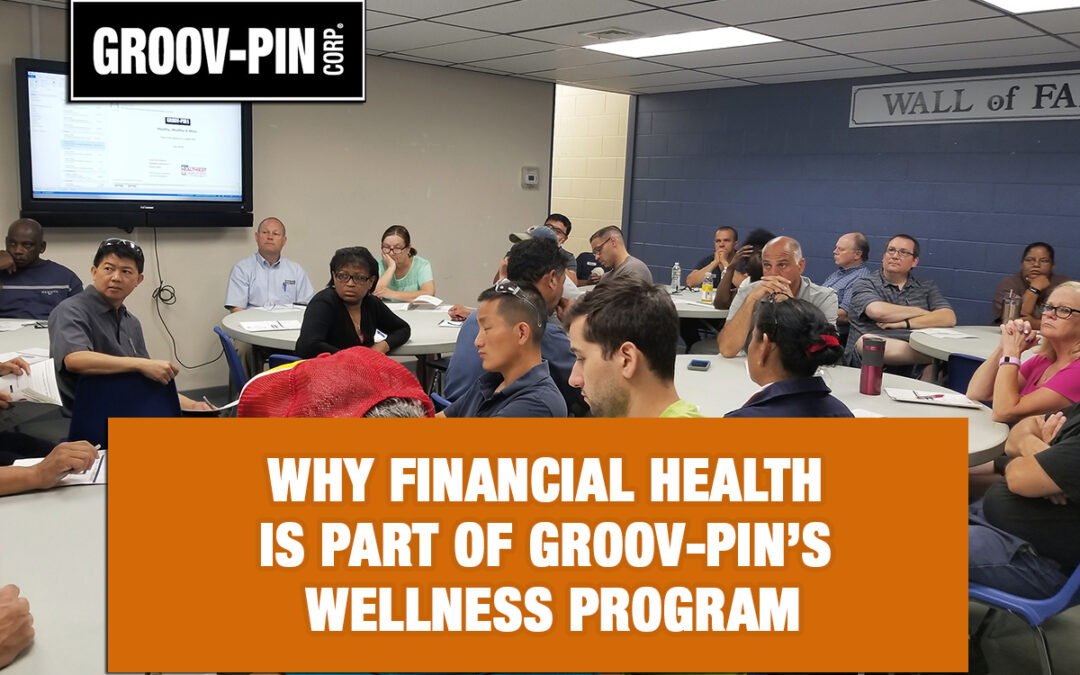
There are a few different ways Groov-Pin helps employees with financial literacy. In addition to lunch and learn events, presentations, and live webinars from Transamerica Retirement, Groov-Pin works with financial consultants at Strategic Retirement Partners who are available to meet with employees.
Groov-Pin also auto-enroll employees in its 401(k) and although they have the ability to opt out at any point, Susan reports that few have chosen to stop contributions. “We also auto-increase contributions and many employees love that they are getting up to contributing 10% without even realizing it,” she said. She noted that 10% of pre-tax income is a commonly recommended contribution goal.
The Future of Groov-Pin’s Financial Wellness Program
Groov-Pin began incorporating financial education into its wellness program three years ago. Today, more corporations are beginning to see the connection between financial and physical health.
According to Forbes, “The recently-released eighth annual Employer-Sponsored Health and Well-Being Survey from the National Business Group on Health and Fidelity Investments found that 84% of 141 large- and mid-sized companies surveyed now have financial wellness programs, up from 76% a year ago.”
A key strategy for the future of financial wellness programs is developing programs that help employees in the most effective way possible. “Employees want information one-on-one,” Susan said. “We’re going to start one-on-one meetings now to teach employees how to use the Transamerica website so they can utilize all of the tools it has to offer.”
As more resources become available, employers will need to adapt to their employees’ financial education needs. By listening to employees, Groov-Pin will be able to more effectively engage them and provide the best possible programs for financial literacy.